Betting Odds Explained: A Simple Guide for New Sports Bettors
Betting odds can feel like a foreign language when you’re new to sports betting. If you’re not sure how odds compare to real outcomes yet, see our Moneyline vs Point Spreadguide for a simple comparison of common bet types.Odds tell you how likely a result is and how much you stand to win if your bet hits. This guide makes reading and interpreting betting odds easy so you can approach wagers with confidence — not confusion.
But what do these numbers actually mean, and how can you use them to make better betting choices? Here’s a simple, beginner-friendly guide to help you understand and read betting odds, so you’ll feel confident placing your first bet.
What Are Betting Odds?
At their core, betting odds show two things: the probability of an event happening and the potential payout if you’re correct. Odds set by sportsbooks indicate how much you could win based on the amount you bet. Understanding odds is essential for new bettors, as it can guide you on which bets offer the best potential return and help you gauge the risk involved.
Odds are set by sportsbooks to represent the implied probability of an event happening. Lower odds mean the sportsbook thinks something is more likely — but payouts are smaller. Higher odds mean less likely outcomes — bigger payouts.
Betting odds vary based on how likely a sportsbook thinks an outcome is. For instance, a favorite (or more likely) team will have lower odds because the payout is smaller, whereas an underdog (or less likely) team will have higher odds with a larger potential payout.
Types of Betting Odds
The three main types of betting odds are Moneyline (or American), Fractional, and Decimal. While each format has its own look, they all convey the same information—just presented differently.
Moneyline Odds (American Odds)
In the United States, Moneyline odds, or American odds, are the standard. They appear as either a positive or negative number:
Positive Odds (+): When you see a positive number, like +200, it indicates an underdog. If you bet $100 and win, you’d earn $200 in profit, plus your original $100.
Negative Odds (-): A negative number, like -150, represents the favorite. This means you’d have to bet $150 to earn a $100 profit. The larger the negative number, the more favored the team or player is to win.
Example: Let’s say Team A has odds of -150, while Team B is listed at +200. This means Team A is favored, and you’d have to bet more on them to get a smaller payout. Betting on Team B would give you a bigger payout if they win, but it’s also riskier.
Fractional Odds
Fractional odds, like 5/1 or 2/5, are traditionally used in the UK and are especially common in horse racing.
For odds of 5/1: For every $1 you bet, you’d earn $5 in profit if you win.
For odds of 2/5: You’d need to bet $5 to earn $2 in profit.
Example: If you bet $20 on odds of 5/1, you’d earn $100 in profit (5 x $20), plus your original $20 back, for a total of $120.
Decimal Odds
Decimal odds are most common in Europe, Australia, and Canada and are perhaps the easiest to understand for new bettors. The decimal shows the total payout you’ll receive if you win (your stake multiplied by the odds).
Example:With odds of 2.50, a $100 bet would return $250 in total ($100 x 2.50).This includes both your winnings ($150) and your original stake ($100).
Comparison Table
American (+150) → Bet $100 → Profit: $150
Fractional (5/1) → Bet $20 → Profit: $100
Decimal (2.50) → Bet $100 → Return: $250 total (profit + stake)
Key Takeaway:While Moneyline odds are common in the U.S., it’s useful to be familiar with all three formats. Most sportsbooks allow you to switch between formats, so choose the one that makes the most sense to you.
How to Calculate Payouts Using Different Odds
Knowing how to calculate payouts is crucial for comparing bets and understanding what you stand to win. Here’s how to calculate your payout for each format:
Moneyline Payouts: For positive odds (+200), multiply your bet by the odds divided by 100 (e.g., $100 x (200/100) = $200). For negative odds (-150), divide 100 by the odds, then multiply by your stake (e.g., $100 / (150/100) = $66.67).
Fractional Payouts: Multiply your stake by the first number in the fraction. For 5/1, if you bet $20, your payout would be $100 (5 x $20).
Decimal Payouts: Multiply your stake by the decimal. For 1.75 odds, a $50 bet would return $87.50 ($50 x 1.75).
Key Takeaway: Quick calculations can help you see if a bet offers a worthwhile return based on the risk.
How Betting Odds Reflect Probability
Betting odds don’t just indicate payouts—they also hint at how likely the sportsbook thinks an outcome is. The link between odds and probability gives bettors a clearer sense of the risk involved. Higher odds indeed indicate a lower probability of the event happening, such as an underdog team winning a championship. However, this also means that if you do place a bet on the underdog and they win, the potential payout will be significantly higher than if you had bet on the favorite. It’s a classic risk-reward scenario in the world of sports betting. Conversely, lower odds suggest a higher likelihood (such as the favorite winning), though the payout will be smaller.
Converting Odds to Implied Probability
To convert odds into implied probability, you can use these formulas:
Moneyline Odds: For positive odds, probability = 100 / (odds + 100). For negative odds, probability = odds / (odds + 100).
Decimal Odds: Probability = 1 / decimal odds.
Example: If the odds are -150, the implied probability is 150 / (150 + 100) = 60%. This means the sportsbook believes there’s a 60% chance the favorite will win.
Key Takeaway:Understanding implied probability can help you gauge risk and make more strategic bets.
Reading and Comparing Betting Odds in Action
Let’s see how odds work in real-life betting situations.
Example: Football Match: Say you’re looking at a game where Team A has -110 odds, and Team B has +130. Team A is favored, but not by much, since both teams are close in ability.
Live Betting: Odds shift in real-time during a game based on the score, injuries, or momentum. Live betting lets you ride the wave of shifting odds, but it requires lightning-fast reflexes and a keen eye for those in-game momentum swings.
Parlay Bets: In a parlay, multiple bets are combined for a larger payout. Each leg in the parlay has odds, and the total odds reflect all the combined probabilities. Parlays are higher-risk but offer higher rewards.
Key Takeaway: The more familiar you become with odds in action, the better you’ll be at spotting valuable bets and maximizing your payout potential.
When you’re ready to put this into practice, our NFL Betting Beginner Guide shows how odds are applied in real game situations. 👉 NFL Betting Beginner Guide →
Learning to read betting odds takes practice, and many new bettors make mistakes along the way. Here are a few pitfalls to avoid:
Misreading Odds Format: Switching between odds formats can be confusing. Make sure you know which format you’re working with so you don’t misinterpret the odds.
Overlooking Odds Changes: Odds often shift before a game due to news or changing betting patterns. Watch these fluctuations closely to make sure you’re betting with the best possible value.
Not Comparing Odds Across Sportsbooks: Different sportsbooks offer different odds. Always compare odds to make sure you’re getting the most profitable bet.
Misunderstanding implied probability — thinking a bet “feels right” without comparing its implied probability to true chances.
Key Takeaway:Small adjustments and awareness of odds fluctuations can help you make more strategic bets and avoid costly beginner mistakes.
For help identifying value in odds, read our Betting Odds vs Value Betting guide. 👉 Betting Odds vs Value Betting →
Use Odds to Your Advantage
Understanding betting odds is one of the most valuable skills a new bettor can develop. Whether you’re betting on your favorite team or trying out live betting, knowing how to read and interpret odds will give you more confidence and control over your bets.
Track Odds Like a Pro (Helpful Tool)
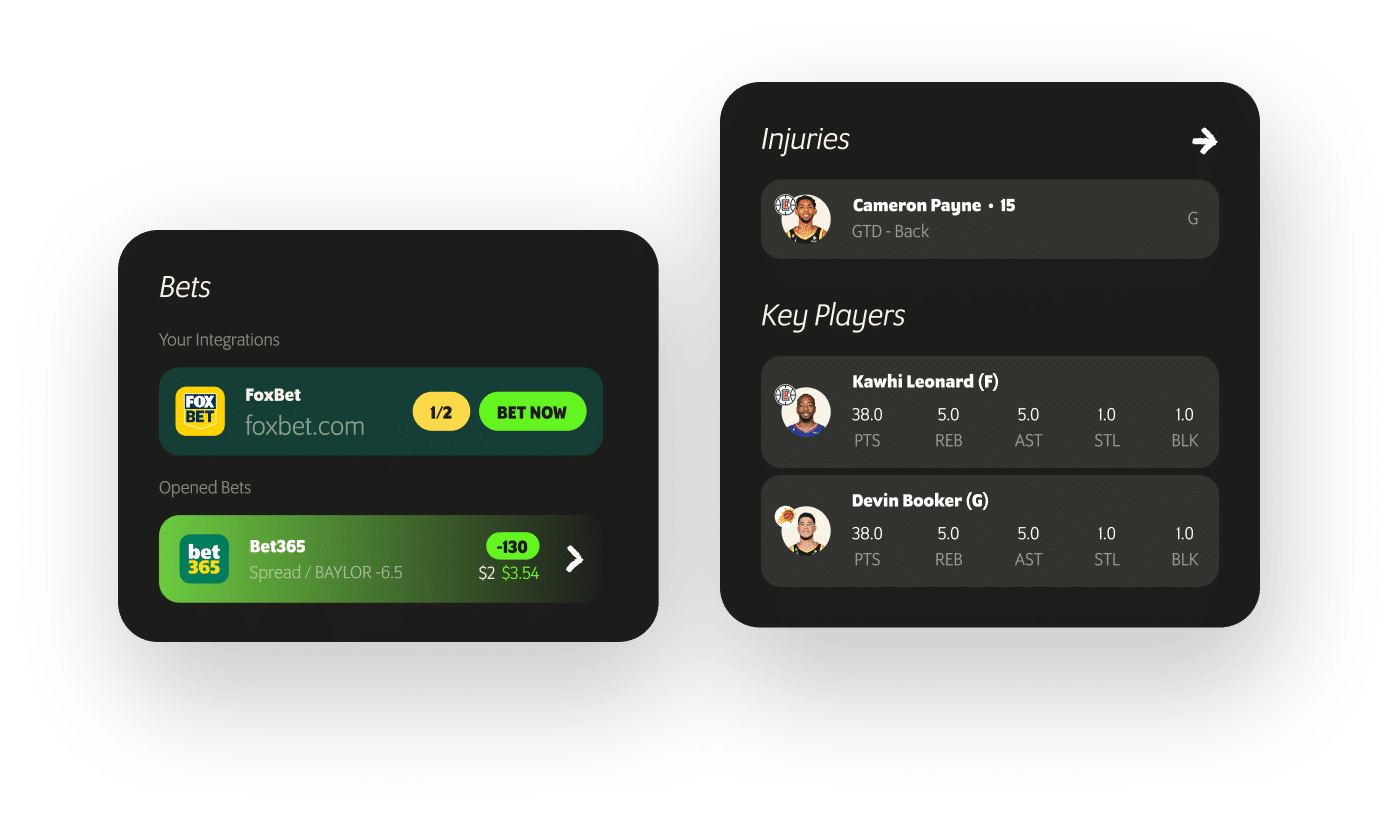
Odds change frequently — and tracking those shifts can give you an edge. The Golden Camel app shows live odds comparisons, keeps your bets organized, and lets you see how odds evolve in real time.
👉 TryGolden Camel— compare odds and track movement across sportsbooks.
FAQ’s
Q: What do + and – mean in American odds? + means underdog (higher payout); – means favorite (lower payout).
Q: Why are decimal odds easier for beginners? Decimal odds include your stake in the payout, making math simpler.
Q: How do odds show implied probability? Higher odds mean lower implied probability and bigger payout; lower odds mean higher implied probability and smaller payout.
Q: When should I compare odds before betting? Always — different sportsbooks list slightly different odds, and shopping lines maximizes expected returns.
Betting Made Simple and Fun
Ready to Put Odds Knowledge to Work?
Understanding betting odds puts you ahead — and tracking odds across sportsbooks keeps you there. The Golden Camel app helps you compare live odds, monitor changes, and manage all your bets in one place.


 Mobile open
 Mobile close